


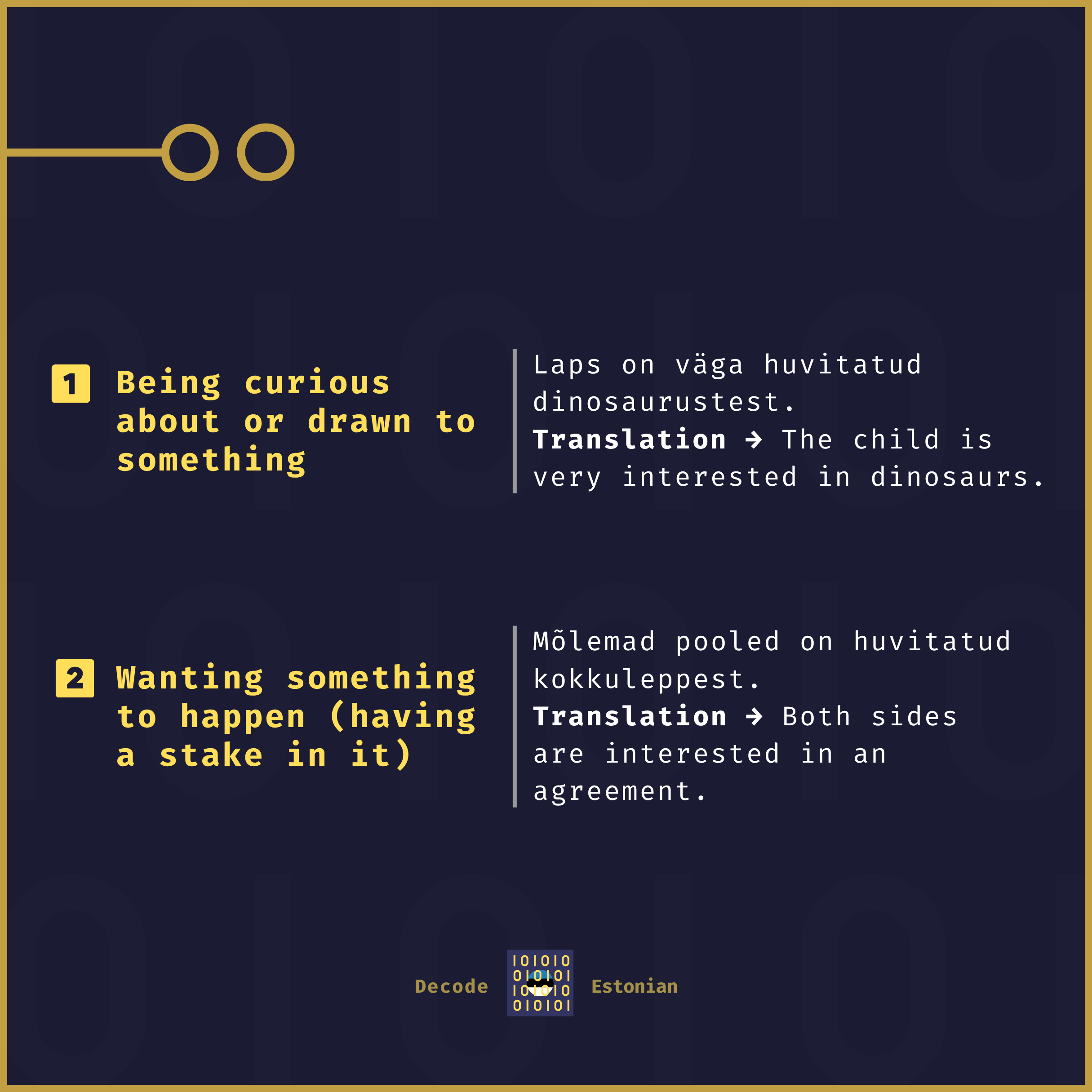
interested; showing interest or curiosity in something; wanting something to happen or succeed; having a stake in something
Building blocks
huvi- → from the noun huvi (interest)
-ta- → (causative) turns it into a verb: huvitama = to interest, to cause interest
-tud → past participle ending (works like English -ed)
So literally huvitatud means: “made interested”
How to use it:
Here is how you use the word “huvitatud” ⬇️
What to remember
What you’re interested in goes in the Elative case (ending -st). English says interested in, Estonian says interested from.
❌ huvitatud filmis → ✅ huvitatud filmist
Example
Anna on väga huvitatud uuest tööpakkumisest
Literally: “Anna is very interested new-from job-offer-from”
Idiomatically: “Anna is very interested in the new job offer”
Anna - Proper Noun - Nominative Singular: "Anna"
on - Verb - 3rd Person Singular, Present Tense: "is"
väga - Adverb - Indeclinable: "very"
huvitatud - Adjective - Nominative Singular: "interested"
uuest - Adjective - Elative Singular: "from new"
tööpakkumisest - Noun - Elative Singular: "from job offer"